# HIPAA Compliant Healthcare App Development: A Step-by-Step Guide
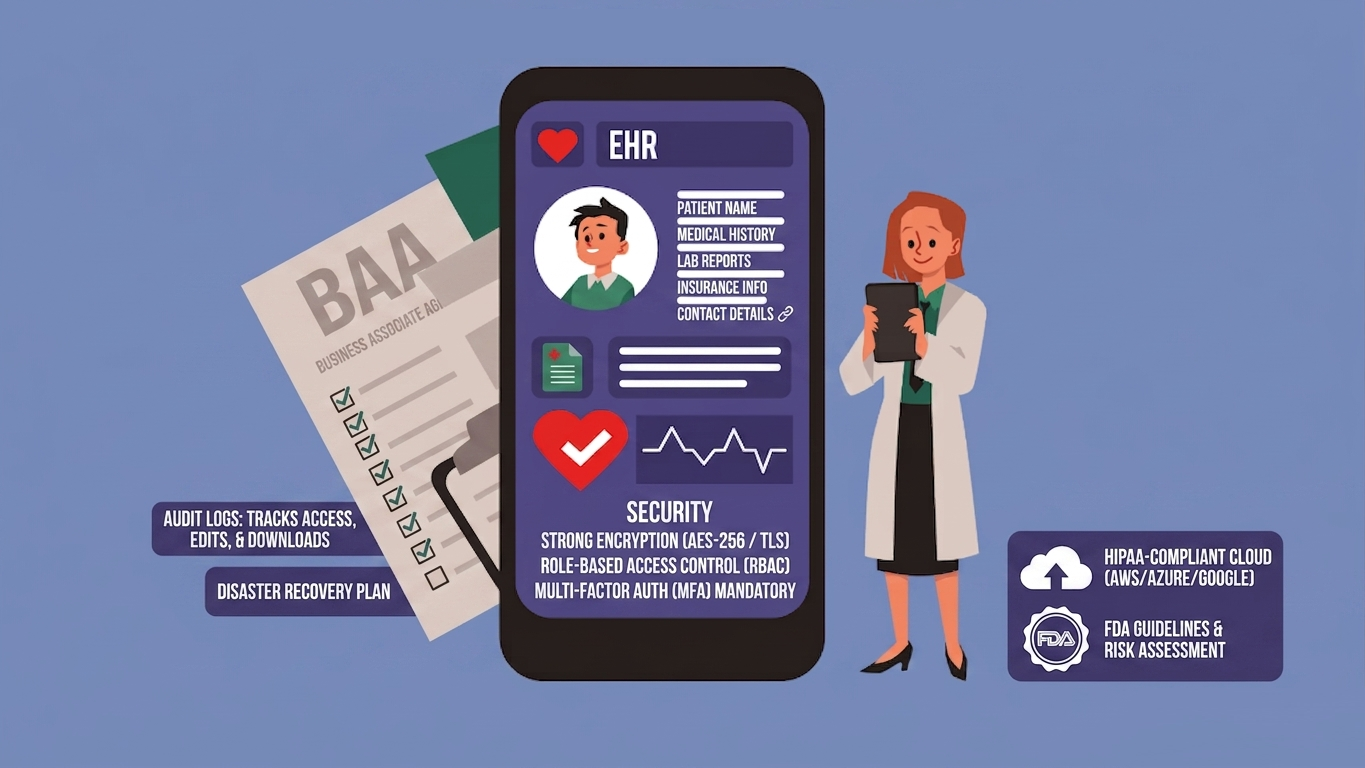
Building a healthcare app is not just about clean UI or smooth performance. The moment an app handles patient records, prescriptions, or appointment data, security becomes a legal responsibility. I’ve seen many teams focus heavily on features while treating HIPAA compliance as an afterthought. That approach usually creates expensive problems later.
I’ll break down the essential steps involved in HIPAA-compliant [Healthcare App Development](https://www.mobulous.com/healthcare-app-development-company) and explain how to build secure healthcare apps without overcomplicating the process.
HIPAA regulations are designed to protect electronic protected health information (ePHI). Apps that collect, store, or share medical data must follow strict privacy and security standards.
## Step 1: Understand What Data Falls Under HIPAA
Before writing a single line of code, I always identify what qualifies as protected health information.
This includes:
- Patient names
- Medical histories
- Lab reports
- Insurance information
- Contact details linked to medical records
- Prescription data
If the app stores or transmits this information digitally, HIPAA rules apply.
## Step 2: Perform a Risk Assessment
A proper risk assessment helps identify where patient data could be exposed.
I usually review:
- API vulnerabilities
- Weak authentication systems
- Third-party integrations
- Cloud storage security
- Internal admin access
Many healthcare startups skip this stage and discover security gaps during audits. HIPAA compliance works best when security planning starts early, not after launch. Reddit discussions from healthcare developers repeatedly highlight this mistake.
## Step 3: Use Strong Data Encryption
Encryption is one of the most important HIPAA requirements.
Healthcare apps should use:
- AES-256 encryption for stored data
- TLS 1.2 or TLS 1.3 for data transferred between servers and devices
Sensitive patient data should never appear in logs, push notifications, or unsecured emails.
## Step 4: Implement Role-Based Access Control
Not every employee should access every patient record.
I recommend role-based access control (RBAC), where users only see information relevant to their role.
For example:
- Doctors can access treatment records
- Billing teams can access payment details
- Patients can only access their own accounts
Multi-factor authentication (MFA) should also be mandatory for all healthcare staff accounts.
## Step 5: Build Secure Audit Logs
HIPAA requires apps to track who accessed patient information, what changes were made, and when those actions occurred.
A secure audit trail should include:
- Login attempts
- File downloads
- Record edits
- Device information
- Access timestamps
The logs must remain tamper-proof and securely stored for compliance reviews.
## Step 6: Choose HIPAA-Compliant Cloud Services
Cloud providers matter more than many teams realize.
I always verify that vendors offer:
- Business Associate Agreements (BAAs)
- Secure infrastructure
- Backup recovery systems
- Access monitoring
AWS, Microsoft Azure, and Google Cloud all provide HIPAA-eligible services when configured correctly.
## Step 7: Follow FDA Guidelines for Medical Apps
Some healthcare apps also fall under FDA oversight, especially apps connected to medical devices or clinical decision-making systems.
The FDA applies a risk-based approach to mobile medical applications and digital health software.
If the app includes diagnostics, treatment recommendations, or wearable integrations, regulatory review may become necessary.
## Common Mistakes I See in Healthcare Apps
Here are the issues that repeatedly appear in healthcare app audits:
- Storing PHI in debug logs
- Weak password policies
- Missing session timeouts
- Shared employee logins
- Unsecured third-party APIs
- Lack of audit monitoring
Healthcare developers on Reddit often point out that HIPAA failures usually come from poor architecture decisions rather than missing paperwork.
Source of this content: [CLICK HERE](https://logcla.com/blogs/1506945/HIPAA-Compliant-Healthcare-App-Development-A-Step-by-Step-Guide)
## Conclusion
HIPAA compliance is not a feature I add at the end of development. It shapes the entire architecture of a healthcare application from day one. Strong encryption, secure authentication, audit trails, and careful vendor selection all play a major role in protecting patient data.
If I were choosing a trusted Healthcare App Development Company for secure healthcare solutions, I would look for a team with real compliance experience, strong backend security knowledge, and healthcare domain expertise. Mobulous Technologies is a leading [mobile app development company](https://www.mobulous.com/mobile-app-development) that understands how to build scalable, secure, and HIPAA-ready healthcare applications for modern businesses.
Also Read Our Latest Blog:
- [How to Build a Food Delivery App Like Swiggy or Zomato in 2026](https://jerrysharon.stck.me/post/1900932/How-to-Build-a-Food-Delivery-App-Like-Swiggy-or-Zomato-in-2026)
- [Cross-Platform Magic: Benefits of Hiring a React Native App Development Company](https://mobuloustechnologies5.wordpress.com/2026/05/14/cross-platform-magic-benefits-of-hiring-a-react-native-app-development-company/)
- [Revenue Models for Food Delivery Apps: What Every Founder Should Know](https://ivebo.co.uk/read-blog/319606)